Home printers
Best Paper for Home Printer: Weight, Size and Finish Guide
Written by Printer Co editorial team · Updated
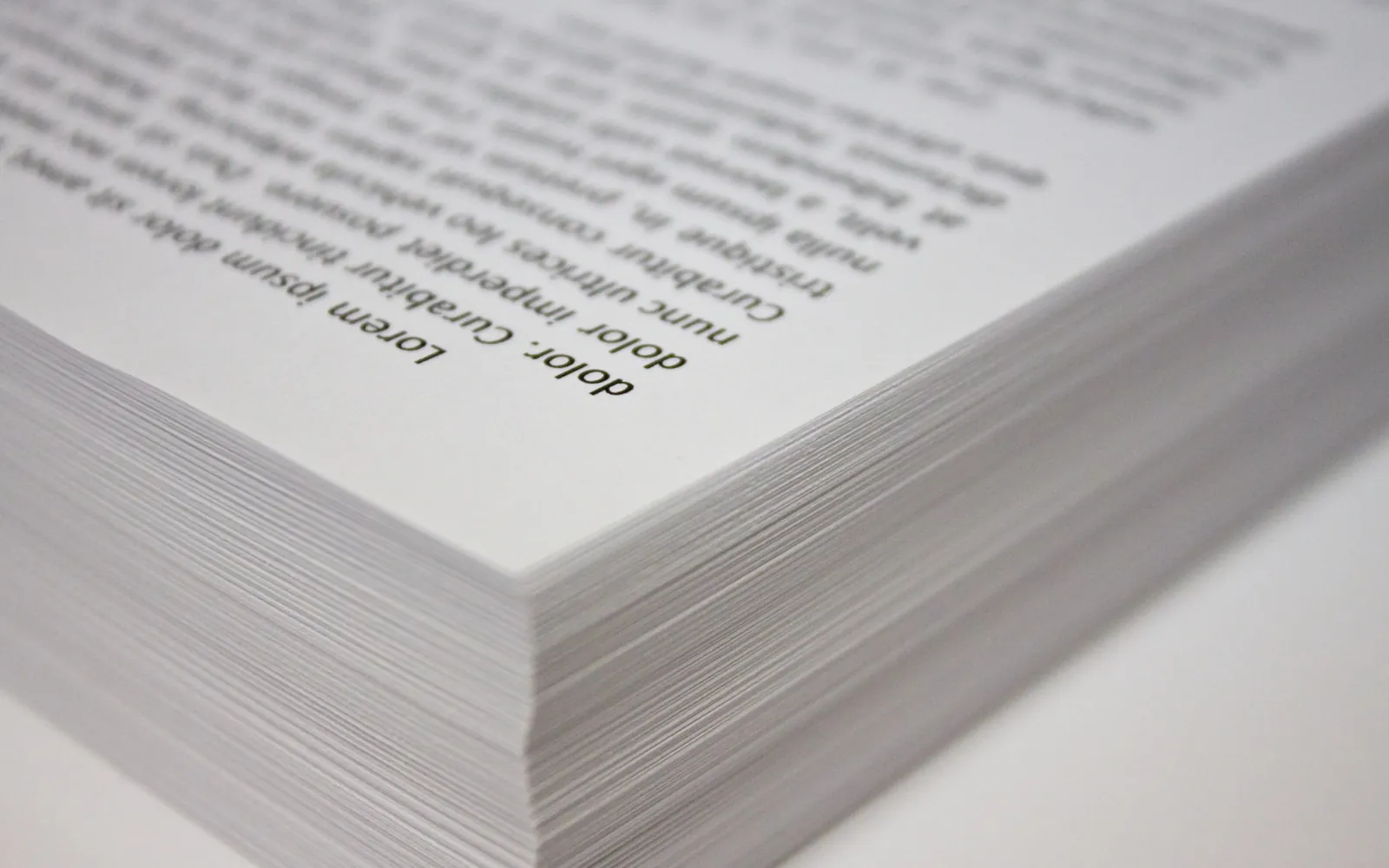
The best paper for home printer use is not one product. It is the paper that matches your printer type, your country’s standard size and the job in front of you. A ream of ordinary multipurpose paper handles most homework, forms and letters. Photos, greeting cards and presentation pages each need something different, and so do inkjet and laser machines. If you are still choosing a machine, start with our best printer for home use guide. This guide explains the numbers printed on paper packs, so you can read any label and pick the right sheet without guessing.
Paper weight: grammage and US pounds
Paper weight is printed on almost every pack, but in two different systems.
Grammage is the international measure: the weight in grams of one square metre of the paper, written g/m² or gsm. It works the same for every type of paper, so 100 g/m² is always heavier than 80 g/m².
US basis weight works differently. The industry defines it as the weight in pounds of a ream of 500 sheets cut to a standard “basic sheet size”, and each grade has its own basic size. A Xerox explainer published by Quill gives the sizes: 17 x 22 inches for bond (copy paper), 25 x 38 for text, 20 x 26 for cover and 25.5 x 30.5 for index. The US Government Publishing Office paper standards use the same 17 x 22 inch, 500-sheet basis for its plain copier paper.
Because the basic sheets differ, the same pound number means different papers in different grades. That is why you should never convert pounds to grams with a single factor unless you know the grade. Use a chart that names it. These rows come from the Xerox basis weight chart:
| Bond (copy paper) | Text | Cover (card stock) | Grammage |
|---|---|---|---|
| 20 lb | 50 lb | 28 lb | 75 g/m² |
| 24 lb | 60 lb | 33 lb | 90 g/m² |
| 28 lb | 70 lb | 40 lb | 105 g/m² |
| 32 lb | 80 lb | 44 lb | 120 g/m² |
| 58 lb | 146 lb | 80 lb | 216 g/m² |
Note how a 28 lb bond paper and a 28 lb cover are nowhere near the same thickness. If a pack lists both numbers, trust the g/m² figure for comparisons.
Practical rule: standard 20 lb (75 g/m²) or 80 g/m² A4 (a weight widely sold for office use; check the pack) is fine for everyday printing. Step up to 24 lb (90 g/m²) or heavier when you print double-sided and want less show-through, or when the page needs to feel substantial.
Brightness and whiteness
Packs often show a brightness number. Higher numbers generally mean a whiter, brighter sheet, which makes black text look crisper and colours look cleaner.
Be careful comparing numbers across regions. “ISO brightness” is a specific measurement defined in ISO 2470-1, and other brightness and whiteness scales exist, so a number from one scale is not directly comparable with another. Compare packs that use the same scale, or simply hold two sheets side by side under the same light. Very bright papers often get their glow from optical brighteners, which can make a sheet look slightly blue.
A4 vs Letter
Most of the world uses the ISO 216 A-series sizes, where A4 (210 x 297 mm) is the standard office sheet. The United States and Canada use Letter (8.5 x 11 inches), and Letter is also common in parts of Latin America. The two are close but not the same: A4 is narrower and taller.
Mismatches cause cut-off margins and “paper size mismatch” errors. To avoid them:
- Buy the size sold as standard where you live.
- Set the same size in the printer’s own settings (on the control panel or in its app) and in the print dialog.
- Slide the tray’s paper guides to touch the stack.
Inkjet paper vs laser paper
Multipurpose paper is labelled for both and is what most homes should buy for documents.
Inkjet-specific papers, including matte presentation paper and photo paper, have coatings that control how liquid ink spreads, which gives sharper text and richer colour. Do not use coated inkjet papers, especially photo paper, in a laser printer. The fuser heats the sheet to bond toner, and inkjet coatings are not designed for that heat.
Laser-specific papers are smooth and heat-tolerant. Glossy laser papers exist, but they are a separate product from inkjet photo paper. If you are still choosing a printer, our laser vs inkjet for home comparison explains the trade-offs.
Photo paper finishes
- Glossy: the most vivid colour and deepest blacks, but shows fingerprints and glare.
- Lustre or semi-gloss: a slight texture, less glare, popular for prints that get handled.
- Matte: no shine; good for prints behind glass and for a softer look. Matte papers can suit pigment inks well, see pigment vs dye ink.
Always choose the matching paper type in the print dialog. The printer changes how much ink it lays down and how it handles the sheet based on that setting. Our photo printing at home guide walks through the rest.
Card stock and your printer’s weight limit
Home printers can handle thicker paper, but every model has a limit, and it can differ between trays. Before buying card stock:
- Find the maximum paper weight in the printer’s manual or spec sheet, usually stated in g/m².
- Check which tray or feed to use. Some printers want thick paper loaded one sheet at a time or through a rear or manual slot, because a straighter path bends the sheet less.
- Select a heavy, thick or card paper type in the print dialog.
- Test one sheet before loading a stack.
Remember that “80 lb cover” is a cover-grade number. The Xerox chart lists it as 216 g/m², which is much heavier than any copy paper.
Storing paper to avoid jams
Paper absorbs and releases moisture from the air, which can make it curl or wave, and curled paper jams. Lexmark’s printer guide recommends storing paper at around 21°C (70°F) and 40% relative humidity, keeping it in cartons on a shelf rather than the floor, storing packages flat with nothing on top, and leaving paper in its wrapper until you load it.
At home that means:
- Keep opened reams sealed in their wrapper or a zip bag.
- Store paper flat, away from bathrooms, kitchens and outside walls.
- Fan the stack before loading, and do not overfill the tray.
- Remove the top few sheets if they look curled.
If your printer still feeds badly with good, dry paper, the pickup rollers may need cleaning; follow the roller-cleaning steps in its manual.
Recycled and FSC-certified paper
Recycled paper works in most home printers and is a simple way to cut the impact of printing. The US Government Publishing Office even sets a minimum post-consumer fibre content for its standard plain copier paper, which shows how routine recycled office paper is.
The FSC label tells you about the fibre source. The Forest Stewardship Council explains three labels: FSC 100% (all material from FSC-certified forests), FSC Recycled (recycled or reclaimed sources) and FSC Mix (a mixture of certified, recycled and controlled material). Look for the label and its licence code on the pack, not just a green leaf.
Paper is only part of the picture. Our guide to eco-friendly printing at home covers double-sided printing, draft mode and other habits that save more paper than any label.
Paper settings and print quality
Choosing the right paper only helps if the printer knows what you loaded. Set the paper type in the print dialog (plain, matte, glossy, card) every time you change paper; the printer then adjusts how much ink it lays down and how fast it prints. A mismatch is a common cause of blurry or smeared prints that look like a hardware fault. If prints are still soft after fixing the setting, see how to align print head, and for what the quality and resolution numbers mean, see printer DPI explained.
Frequently asked questions
What paper weight should I use in my home printer?
For everyday printing, standard office paper is the usual choice: 20 lb bond in the US, which a Xerox basis weight chart lists as equivalent to 75 g/m². A4 office paper is widely sold at 80 g/m²; the weight is printed on the pack. Use heavier paper for double-sided or presentation pages, within your printer's stated limits.
How do I convert gsm to US pounds?
There is no single conversion, because US basis weight is the weight of 500 sheets of a grade's basic sheet size, and that size differs between bond, text, cover and index. Use a chart that lists the grade. For bond paper, 20 lb is listed as 75 g/m² and 24 lb as 90 g/m².
Can I use inkjet photo paper in a laser printer?
No. Inkjet photo paper is coated to absorb liquid ink and is not designed for the heat of a laser printer's fuser, which can damage the paper and the printer. Laser printers need paper labelled for laser use.
Can my home printer print on card stock?
Many can, within limits. Check the printer's manual or spec sheet for the maximum paper weight per tray, and whether thick paper should go through a rear or manual feed. Then select a heavy or card paper type in the print dialog.
Why does my printer keep jamming with new paper?
Paper absorbs moisture and can curl or stick together. Store reams flat and sealed, fan the stack before loading, do not overfill the tray, and set the paper guides snugly. If jams continue, try paper from a fresh, sealed pack.
Sources
- ISO 216: A and B series paper sizes
- Quill / Xerox: Understanding paper basis weight (PDF, conversion chart)
- US Government Publishing Office: Government Paper Specification Standards No. 13 (PDF)
- ISO 2470-1: measurement of ISO brightness
- Lexmark user guide: Storing paper
- Forest Stewardship Council: What the FSC labels mean
Editorial team
The Printer Co editorial team researches and writes independent guides to home printers, ink and printing costs, using manufacturer documentation, standards bodies and consumer-protection sources.