Costs and eco printing
Printer Cost per Page: How to Calculate It Yourself
Written by Printer Co editorial team · Updated
Printer cost per page is the single most useful number when you buy a printer or its supplies. Box prices mislead; cost per page tells you what printing will actually cost. You can work it out yourself in a few minutes with a calculator and the maker’s published yields.
The basic formula
Cost per page = price of the supply / official page yield of that supply
If a black cartridge costs 20 units and is rated at 400 pages, its cost per page is 20 / 400 = 0.05 units. These numbers are for illustration only. Use real prices from a shop on a specific date, and note that date, because ink prices change.
Where to find official yields
Look at the maker’s product page or the cartridge box for the page yield. Reputable figures name the test method:
- ISO/IEC 24711 for colour inkjet cartridges, using test pages from ISO/IEC 24712.
- ISO/IEC 19752 for monochrome laser toner.
- ISO/IEC 19798 for colour laser toner.
If a seller quotes a yield without a method, treat it as an estimate.
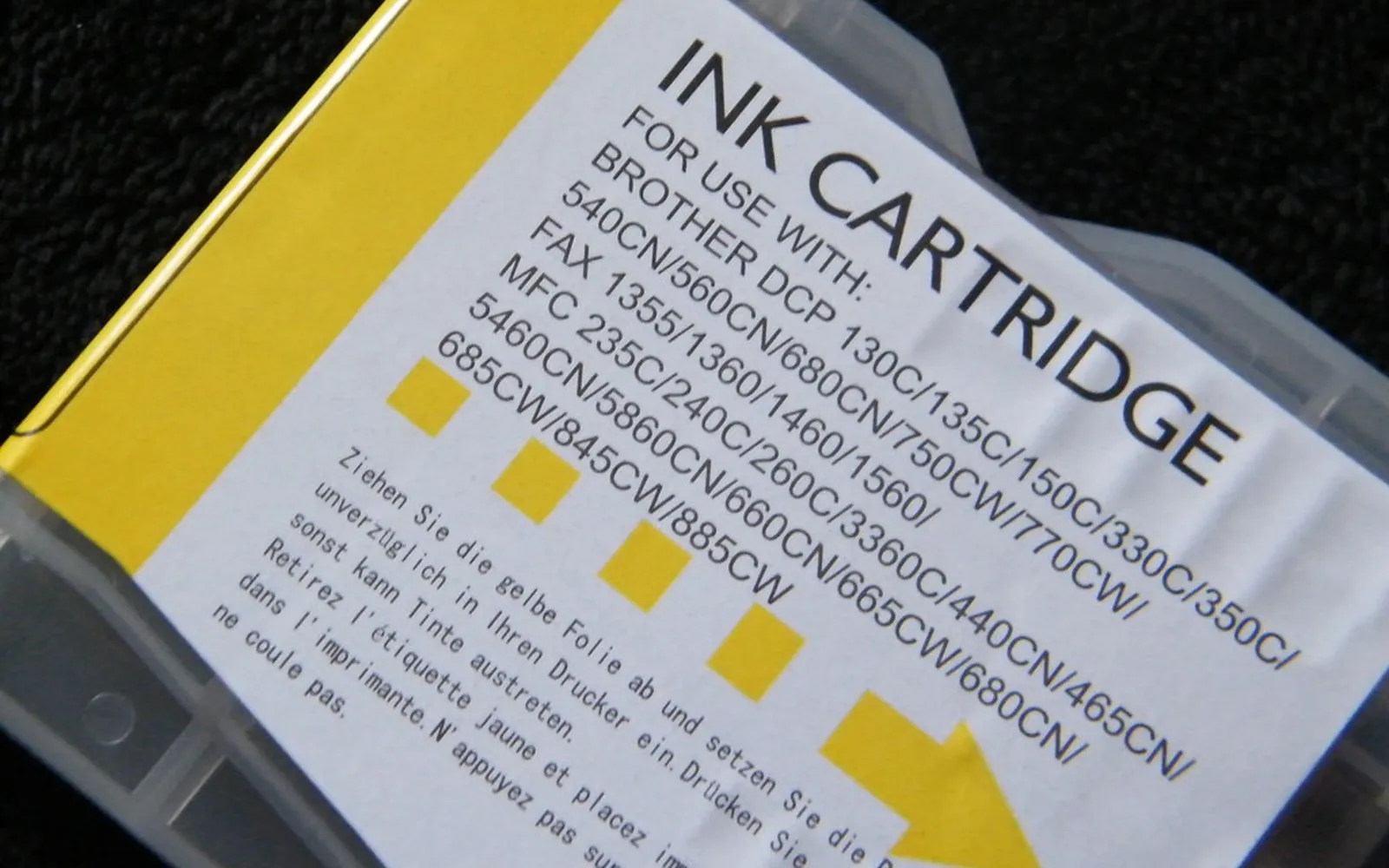
Many cartridges come in a standard and a high-yield (XL) version. Work out cost per page for both: the bigger cartridge usually wins on paper, but only if you finish it before the ink ages. Our guide to are XL ink cartridges worth it runs the comparison step by step.
Black pages
For a black-only page, use only the black supply:
Black cost per page = black price / black yield
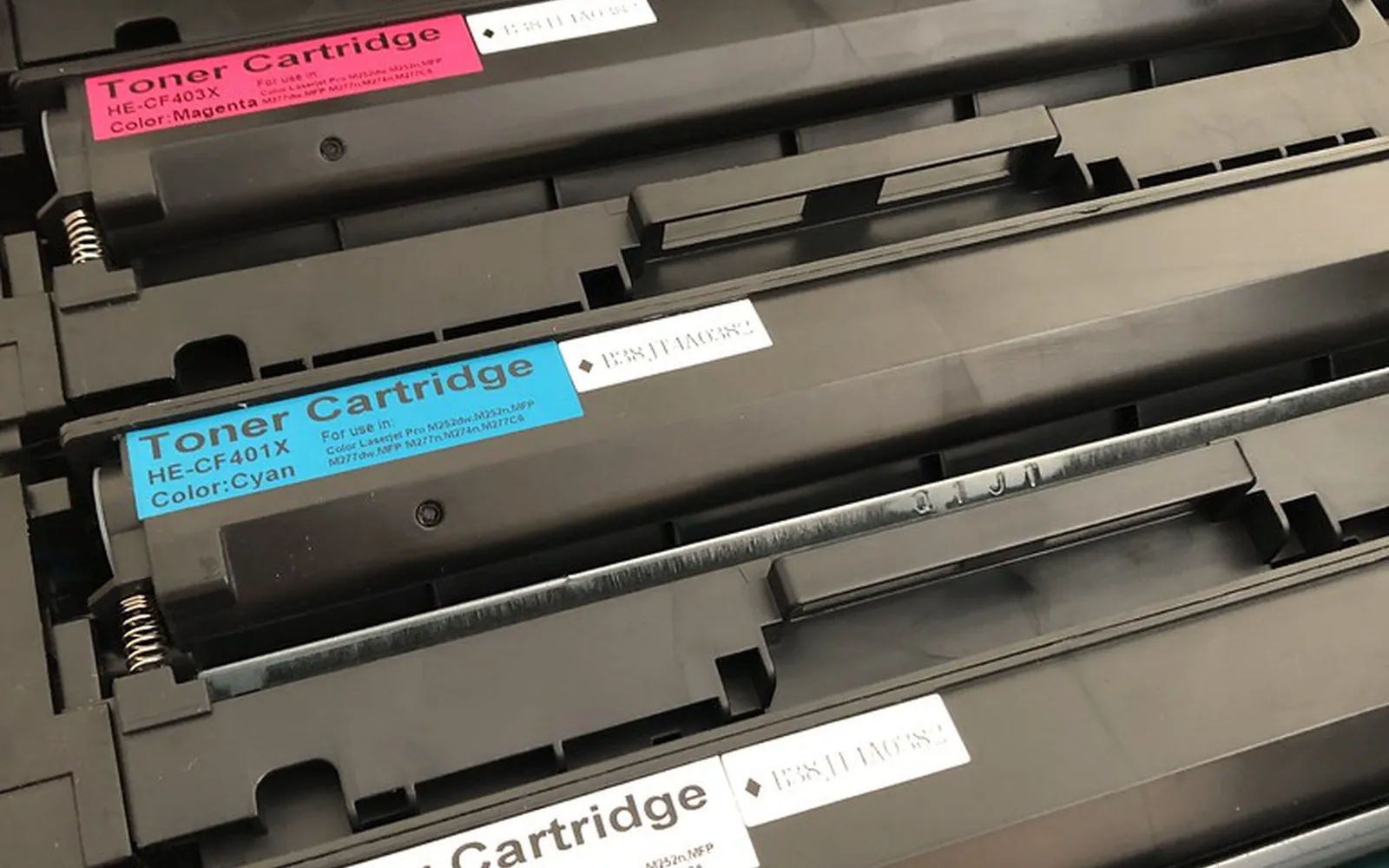
On a laser printer with a separate drum unit, add the drum: drum price / drum rated pages. Toner yields are measured on standard test pages under ISO/IEC 19752, so dense pages, graphics and dark backgrounds use more. How long does toner last explains why your real page count may differ from the box.
Colour pages
A colour page uses black plus each colour. If each colour has its own cartridge:
Colour cost per page = (cyan price / cyan yield) + (magenta price / magenta yield) + (yellow price / yellow yield) + black cost per page
If your printer uses a single tri-colour cartridge, use its price and yield as one figure. Some makers publish a combined colour yield; use it when available.
Blended cost for your household
Most homes print a mix. Estimate what share of your pages are colour, then:
Blended cost per page = (black share x black cost) + (colour share x colour cost)
For example, if a fifth of your pages are colour: 0.8 x black cost + 0.2 x colour cost.
Worked example (illustrative numbers)
These figures are invented to show the arithmetic; replace them with real prices you note on a specific date and the maker’s official yields.
- Black cartridge: 24 units, rated 600 pages, so 0.040 per page.
- Three colour cartridges: 15 units each, rated 400 pages each, so 0.0375 per colour, 0.1125 for all three.
- Colour page: 0.1125 + 0.040 = 0.1525.
- Household prints 100 pages a month, 20% in colour: (0.8 x 0.040) + (0.2 x 0.1525) = 0.032 + 0.0305 = 0.0625 per page.
- Paper: 5 units for 500 sheets, so 0.010 per sheet.
- Full cost: about 0.0725 per page, or roughly 87 units a year for 1,200 pages.
Now change one habit and rerun it. Print the same documents double-sided and paper use roughly halves on multi-page jobs; our guide on how to print double sided shows how to set it as the default. Switch everyday colour pages to black and the blended cost drops towards the black-only figure.
Add paper for the full cost
Paper cost per sheet = price of a ream / sheets in the ream
Plain paper adds a little to each page. Photo paper is a different story: a sheet of good photo paper can cost more than the ink printed on it. For photos, see photo printing at home.
Why real costs run higher
Official yields are measured fairly, but with standard document pages. Your real cost will be higher if:
- You print photos, full-page images or dark backgrounds.
- You print rarely, so a larger share of ink goes to cleaning. See print head clogging.
- You use the starter cartridges that came with the printer, which may hold less ink.
- You replace cartridges at the first low-ink warning rather than when print quality actually fades.
Comparing two printers
To compare printers over their life:
Total cost = printer price + (pages per year x years x blended cost per page)
Run the sum for each printer with your own page count. A cheap printer with expensive cartridges can lose to a pricier printer with cheap ink within a year or two if you print a lot. For the specific comparison most people face, see ink tank vs cartridge printer cost.
Subscriptions turn cost per page upside down
Page-based ink subscriptions charge per page, not per drop of ink. Divide the monthly fee by the page allowance to get the cost per page if you use every page, then compare. Remember that a month with no printing still costs the full fee.
A simple worksheet
Copy this into a note or spreadsheet:
- Pages printed per month: ____ ; share in colour: ____ %
- Black supply price and yield: ____ / ____ = ____ per page
- Colour supplies price and yield: ____ per colour page
- Blended cost per page: ____
- Paper per sheet: ____
- Yearly cost = pages per year x (blended cost + paper): ____
Once you know your number, you can judge any offer quickly, whether it is a high-yield cartridge, a third-party ink deal or a new printer. It also makes it obvious where to save: printing less colour, using draft mode and printing double-sided all lower your yearly total. Our eco-friendly printing at home guide lists the habits that save the most.
Frequently asked questions
How do I calculate the cost per page of my printer?
Divide the price of each cartridge, bottle or toner by its official page yield. For a black page, use the black supply. For a colour page, add the cost per page of each colour supply and the black, unless the maker publishes a combined colour yield.
What is page yield?
Page yield is the number of pages a cartridge or toner prints in a standard test. For colour inkjets, the ISO/IEC 24711 method uses the test page set from ISO/IEC 24712. It lets you compare products fairly, but your own yield depends on what you print.
Why does my cartridge run out sooner than the yield?
Your pages may have more coverage than the test pages, you may print photos, or the printer may use ink for cleaning, especially if it is used infrequently. Starter cartridges can also hold less ink than standard ones.
Should I include paper in cost per page?
Yes if you want the full picture. Divide the price of a ream by the number of sheets. Plain paper adds a small amount; photo paper can cost more than the ink on it.
Does printing double-sided lower cost per page?
It does not change the ink or toner used per printed side, but it roughly halves the paper on multi-page documents, so the paper share of your cost falls.
Sources
Editorial team
The Printer Co editorial team researches and writes independent guides to home printers, ink and printing costs, using manufacturer documentation, standards bodies and consumer-protection sources.